- What does a French drain actually do?
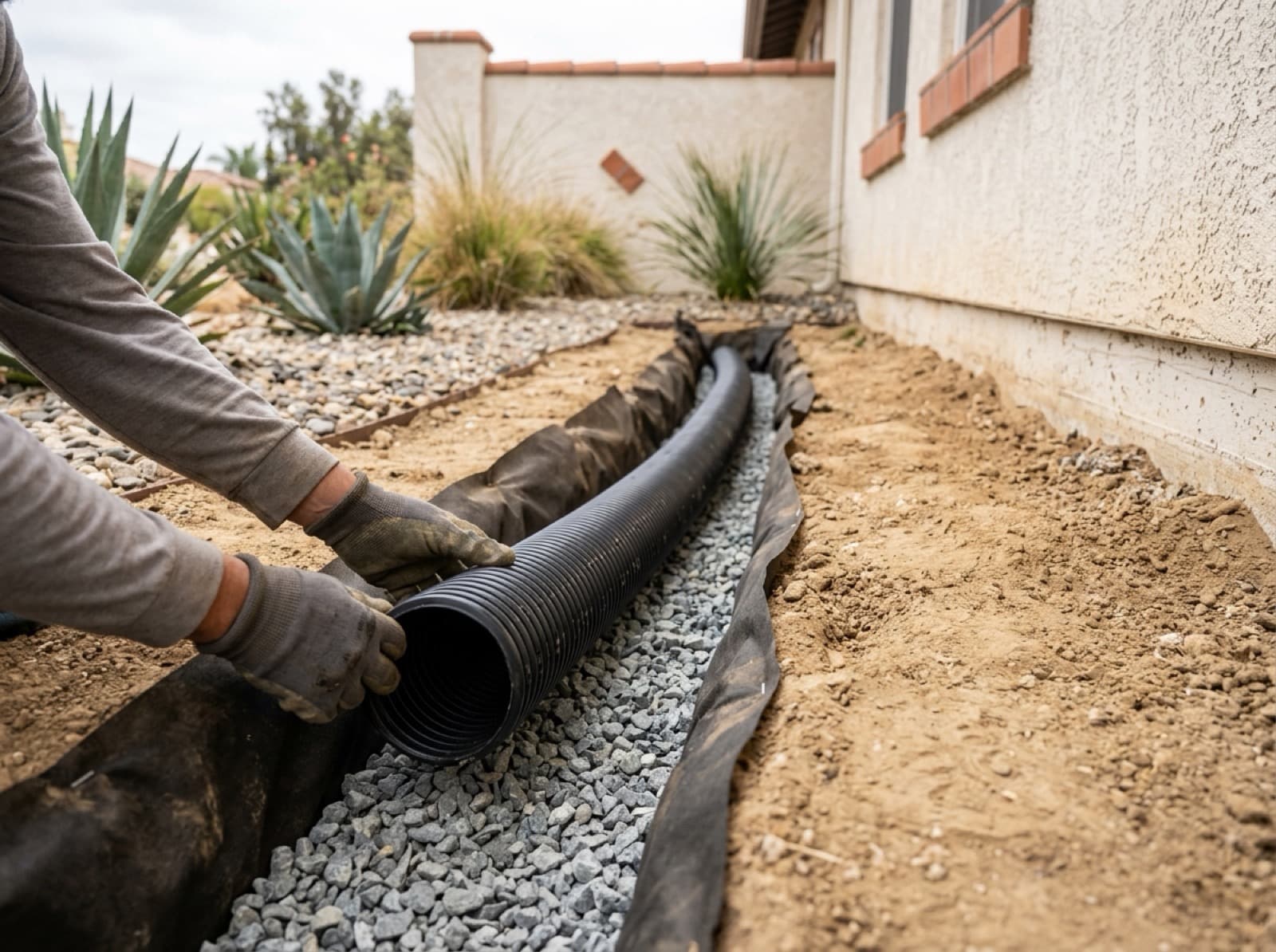
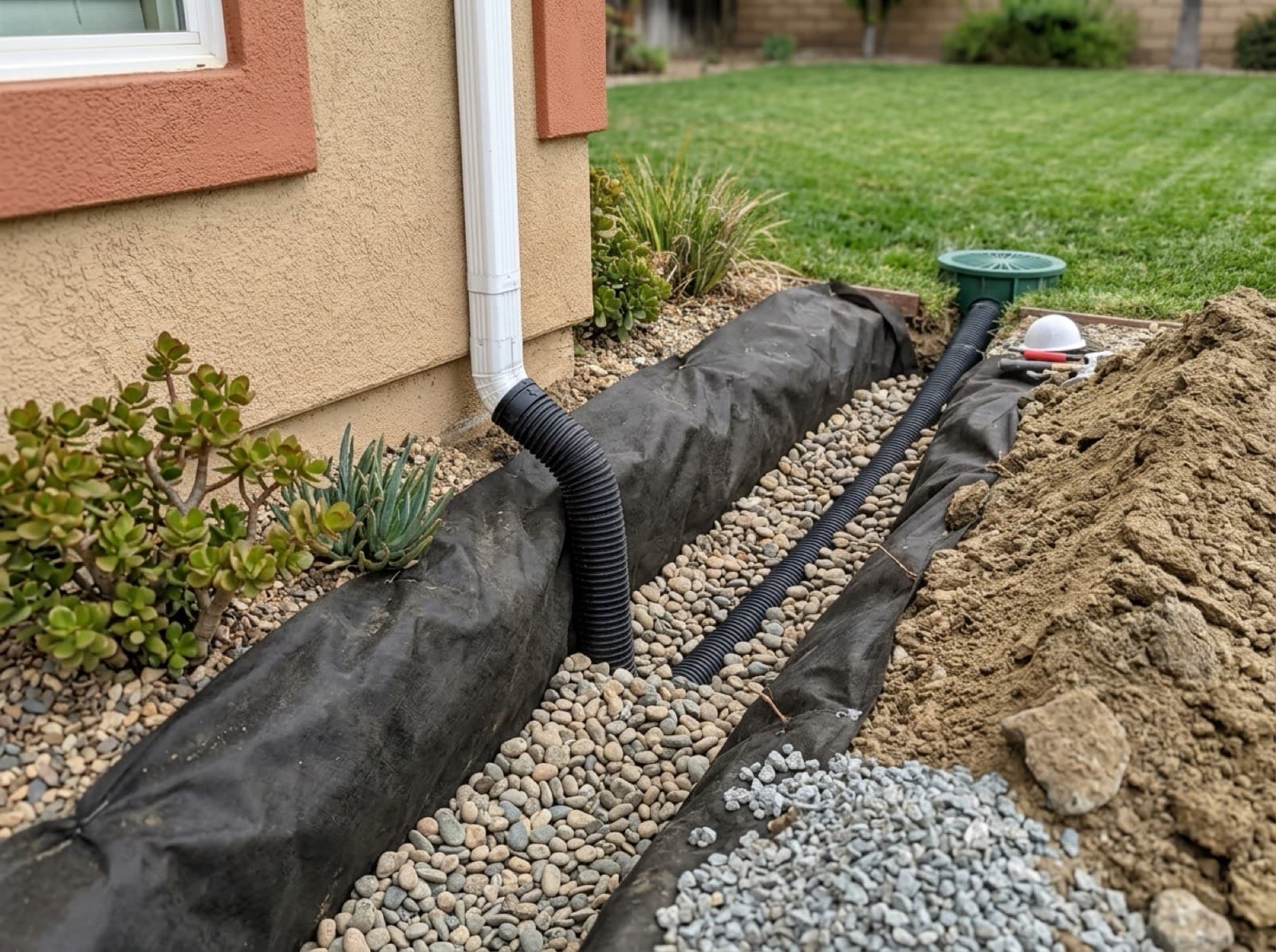
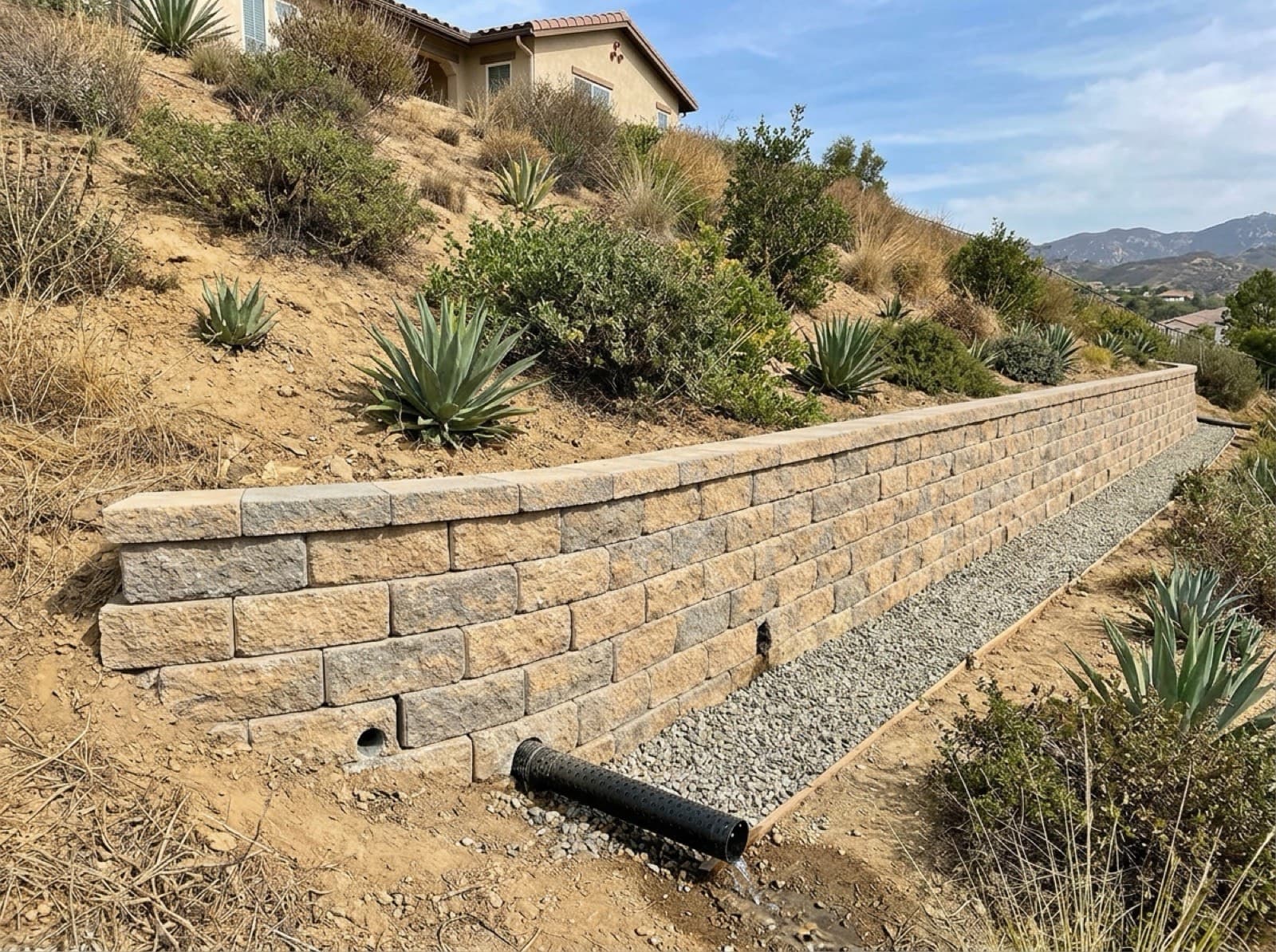
- A French drain is a gravel-bedded perforated pipe set below grade that intercepts water moving through the soil and carries it to a lower outlet. It manages subsurface and slow-draining water — the wet spot that never dries — rather than the sheet flow a surface drain handles.
- Will a French drain work in clay soil?
- It works as conveyance, not as a soak-away. Many lots across the Temecula Valley sit on slow-draining clay, where a buried pit or dry well fills and stays full. A French drain still performs because it collects water and moves it to a discharge point that has fall — the outlet, not the surrounding soil, does the work.
- Where does the water from a French drain go?
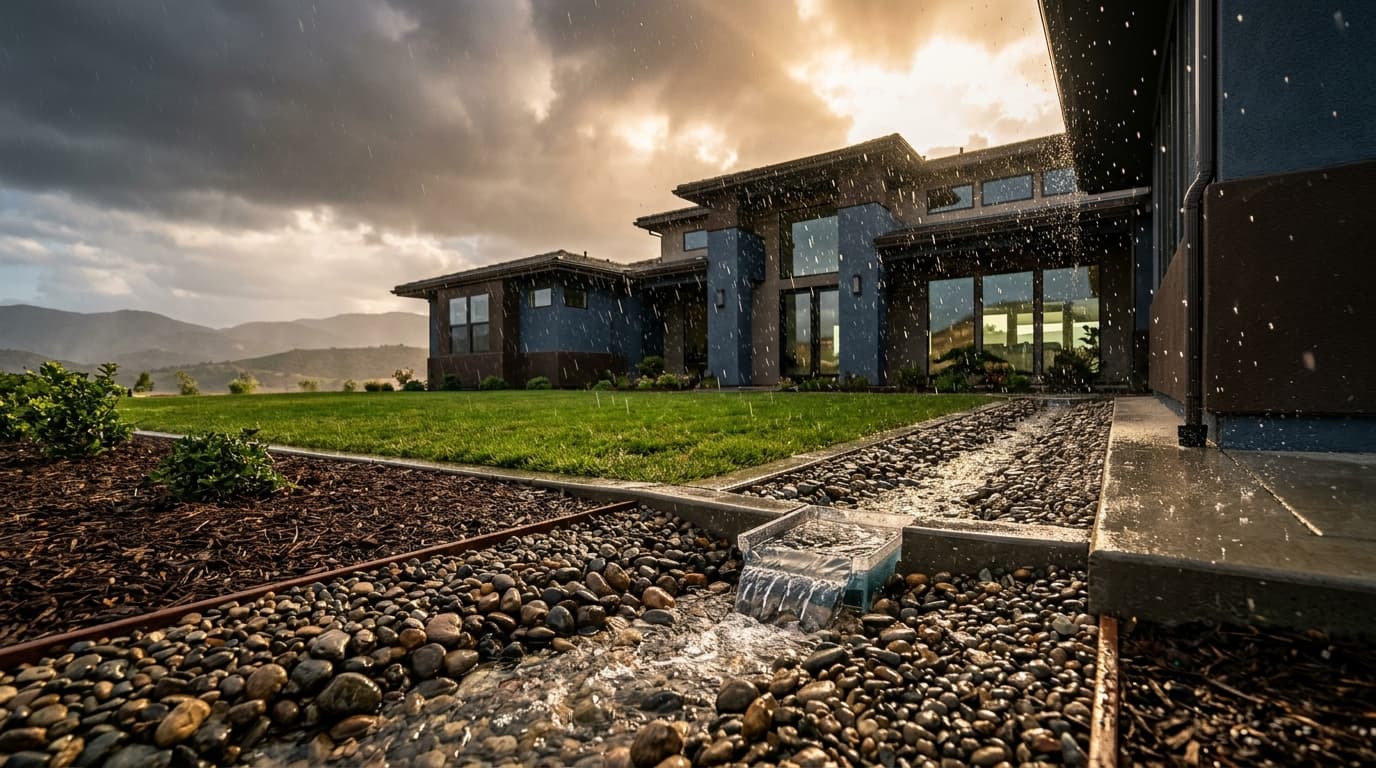
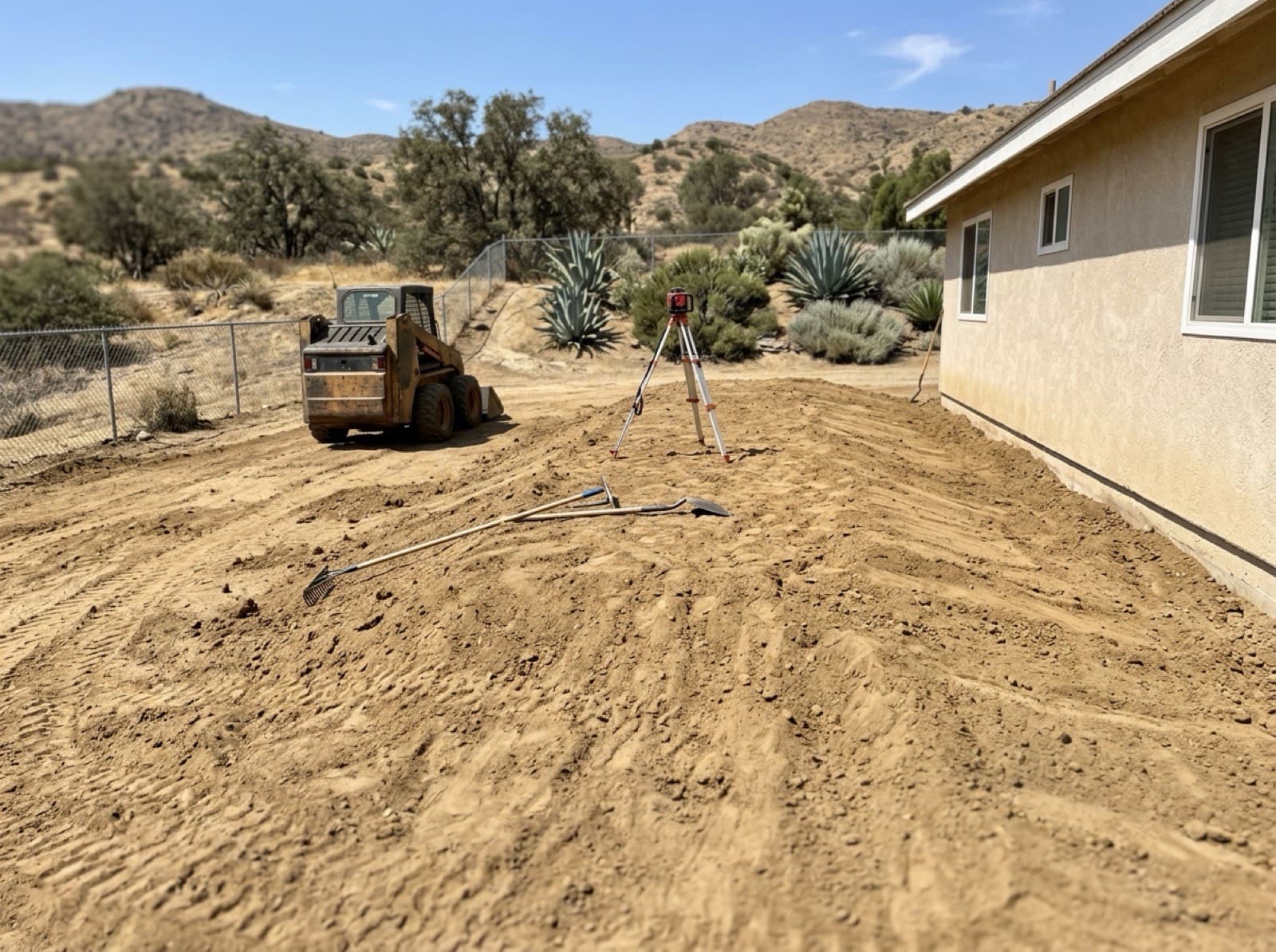
- To a lower point the local code allows — commonly the street through a curb outlet, or another approved drainage way. Because the outlet sets the depth and slope of the whole run, where the water can legally leave is settled before the trench line is drawn, and the requirements differ from city to city.
- How is a French drain different from a catch basin or a channel drain?
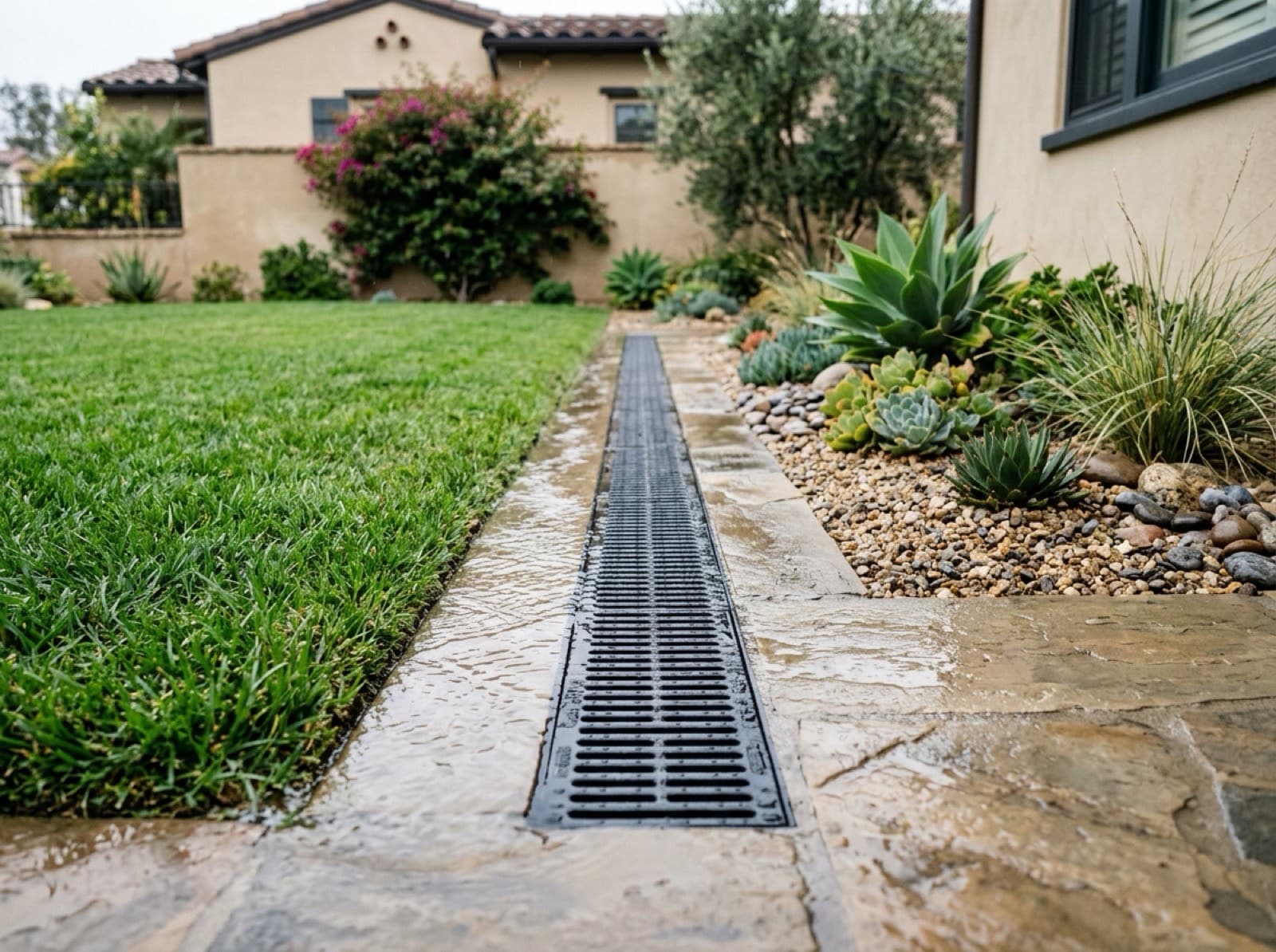
- A catch basin or channel drain collects water sitting on the surface; a French drain collects water moving through the ground. A yard with both surface pooling and soil that stays saturated often needs the two working together.